Transmissible helps public health professionals reach their full potential
In practice, that can mean many things. Whatever competency you want to strengthen, Transmissible offers tools to reach your training goals. Whether it is knowledge transfer through training and courses, or the development of skills through simulations, workshops or games. Beyond that we focus on the things that define how we apply these competencies.
Training and Courses
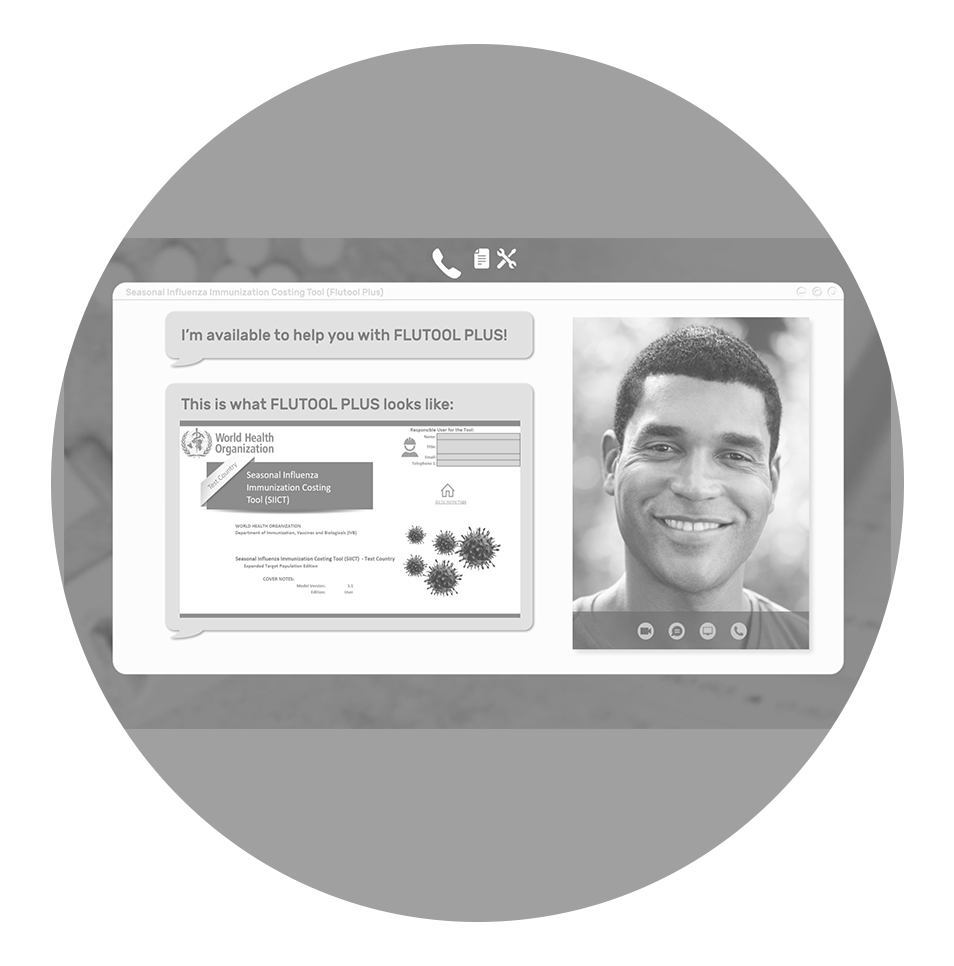
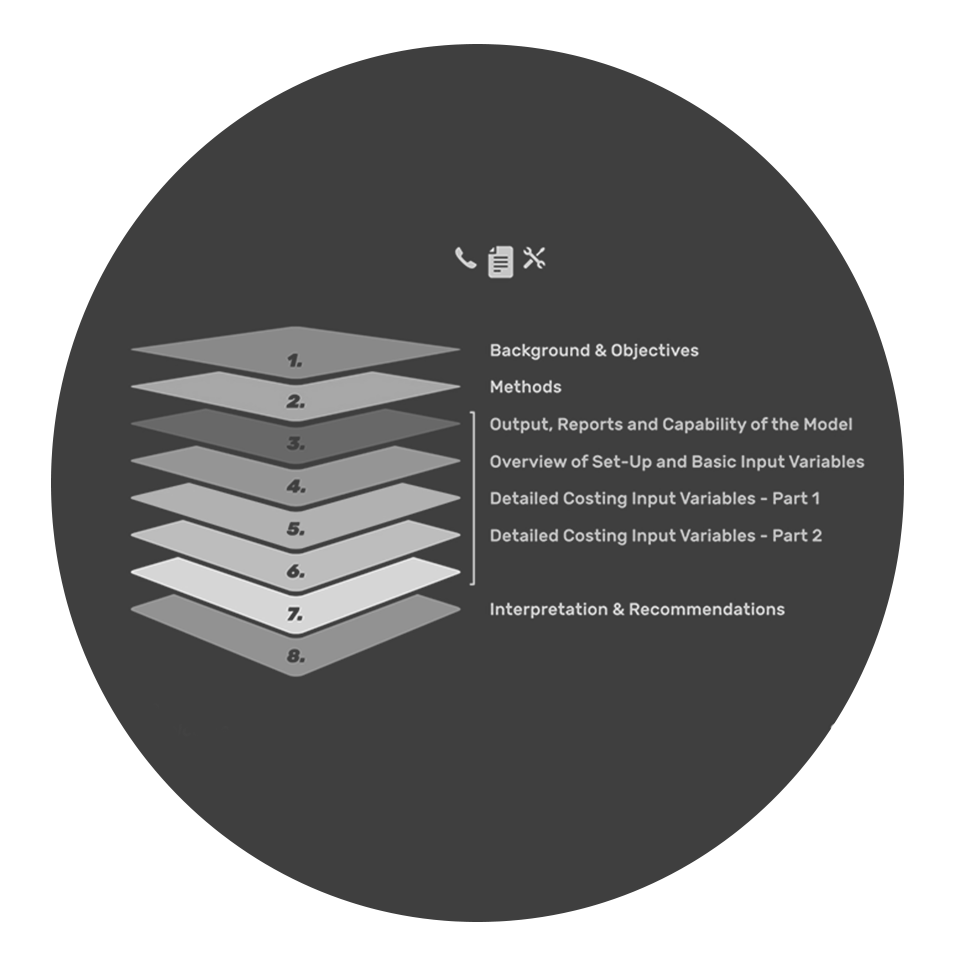
Several excellent online resources are available for the European professional in disease prevention and control. International public organisations offer free online courses, such as the World Health Organisation (WHO) and the European Centre for Disease Prevention and Control (ECDC). Transmissible has developed E-courses, such as ‘Estimating Burden of Seasonal Influenza’ for the World Health Organisation, and microlearning for corporate clients.
Online and distance self-learning provides much-added value in transferring knowledge. However, to be successful, often a combination of E-learning and interaction with peers and supervisors is required.
Transmissible also offers on-site training to blend with existing online learning resources.
We have a vast network of experienced teachers, trainers and facilitators for courses in disease prevention & control, workshops or E-course moderators. Partners are part of an international network of experts in disease prevention & control, covering core functions of event de qtection, threat assessment, threat management, risk communication, crisis evaluation, public health preparedness & training and public health policy. We organise training in English or Dutch, and if so requested, Transmissible appoints international trainers in the network who can provide the training in another language.
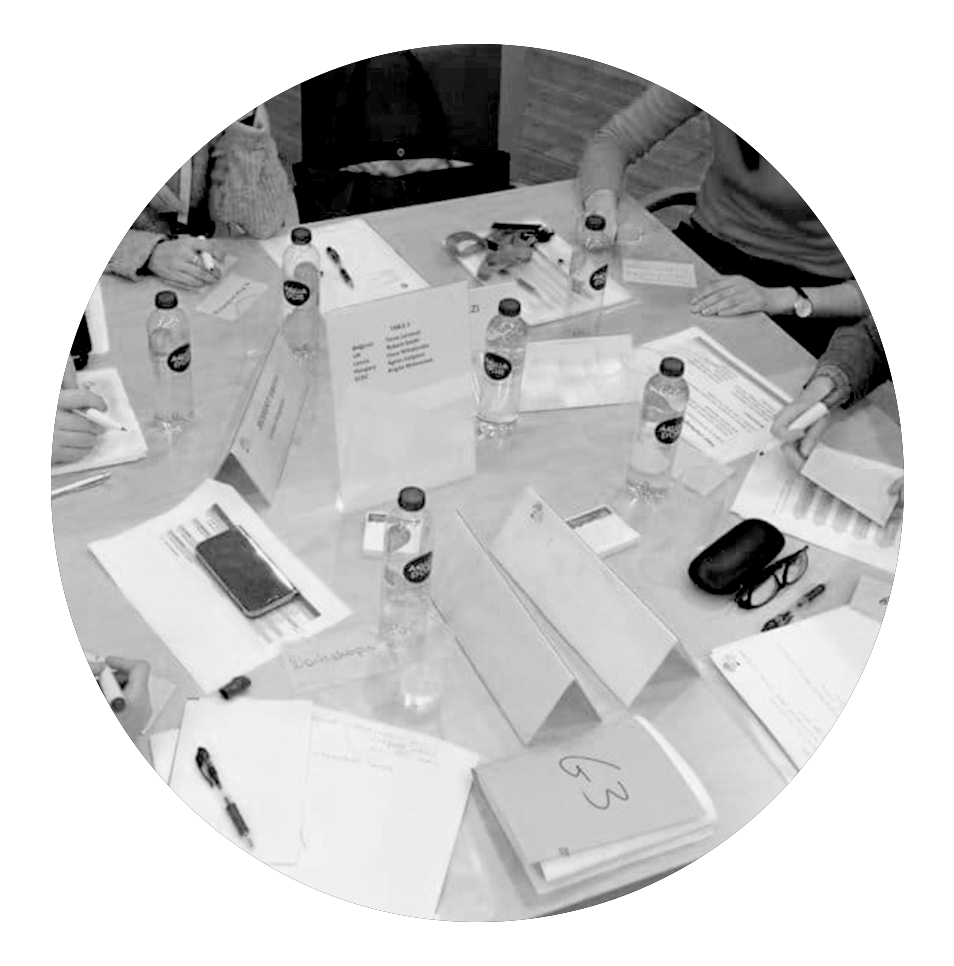
Using our extensive library of outbreak training scenarios, we will train your team in one afternoon or during a full day, in one particular aspect of an outbreak investigation, such as: examining a case series; performing a cohort study; the case-control study; dealing with confounding; matched case-control studies.

Here you can find some case-examples of our Training and Courses products.
PREPAREDNESS WORKSHOPS AND GAMES
The best skills training you can get is through working with seasoned supervisors, like in apprenticeship- or learning-by-doing settings.
Though you will quickly find such training is resource-intensive and not very scalable. So what options are out there for teaching actual skills on both a shorter term and larger scale?
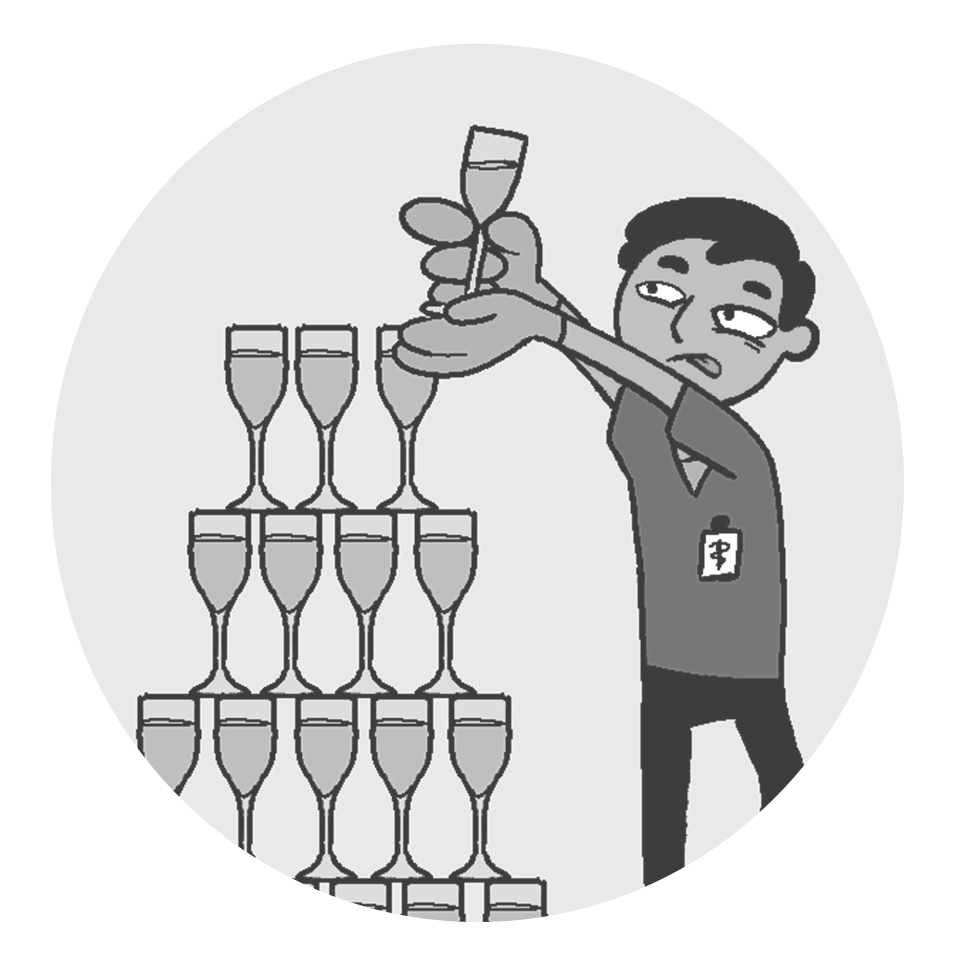
Realistic simulation exercises are an excellent way to put you in emergencies that require you to act and thus teach skills. These could be tabletop sessions set up in classrooms, simulations outdoor in the field or behind a computer screen. When you are challenged make active choices that result in realistic outcomes, it will significantly contribute to the development of your skills.
Learning games, in turn, are very useful in helping participants discover new perspectives, in an engaging and fun way. Games have the unique ability to put the learner in a situation analogous to reality, and have them experience this through a new point of view.
Here you can find some case-examples of our Preparedness Workshops and Games products.
PUBLIC HEALTH STORYTELLING
Probably 100% of all doctors know about microbes and the effect of handwashing, at least, hopefully. They all have the skills to wash their hands. Yet only 50% consistently comply with hand-hygiene protocols. Much of the difference between these two halves is about attitude.
Now consider a conservative politician and a liberal, who serve during an epidemic outbreak. They both receive the same data on the handwashing habits of these doctors and the effect it has on the epidemic. It is very likely they will come with very different forms of policy. Maybe one proposes to monitor the hospitals and fine doctors who fail to wash their hands. The other might propose raising awareness through campaigns and education. Their values inform this difference.
Attitudes are learned tendencies to evaluate our experience in a certain way. Tendencies about how you think, feel and act based on your experience.
Values are what you believe in, the ideas that inform your world-view.
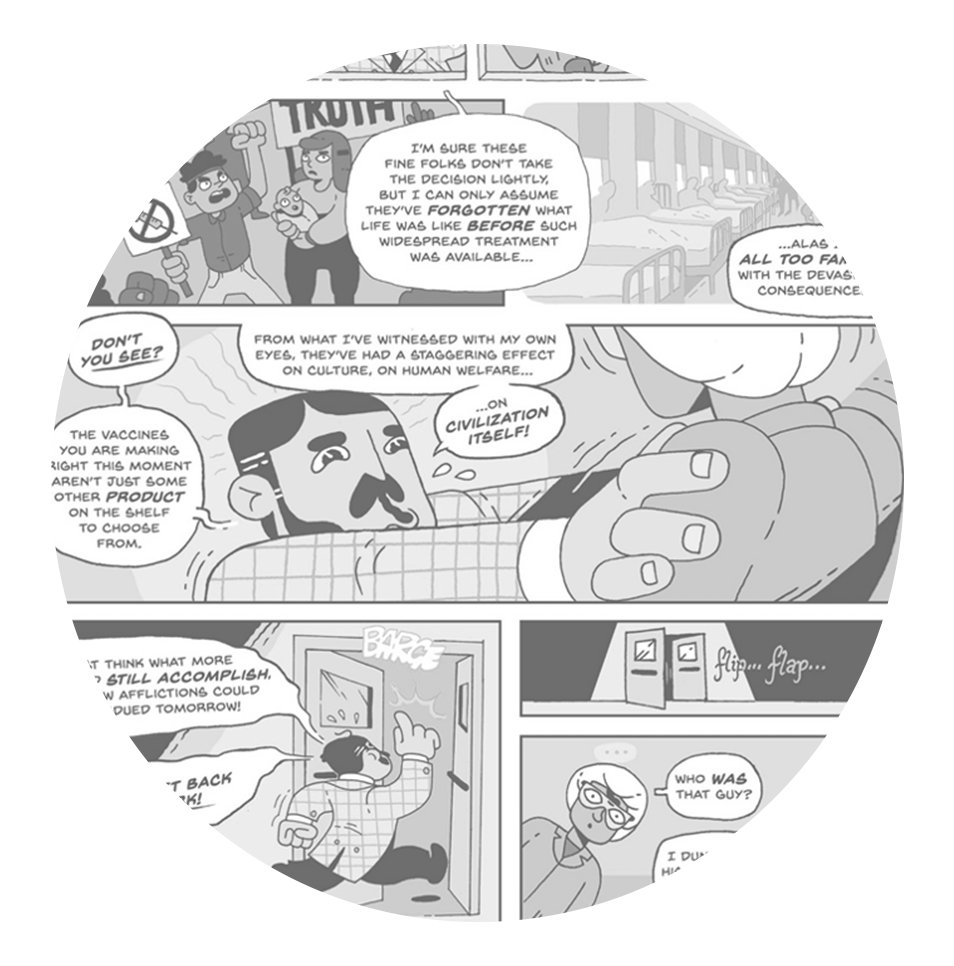
If you want to shape attitudes and values of either professionals or the public, you can’t rely on raw data alone. Here, storytelling is an incredibly effective tool.
Just as the short story about handwashing above illustrates the concept of attitudes and values, stories can be designed to have one understand attitudes and to discover what undefined values they act on. Realising these things, you can follow those of others as well.
Here you can find some case-examples of our Public Health Storytelling products.